Aviation: Flight Mangement System
Challenge & Approach
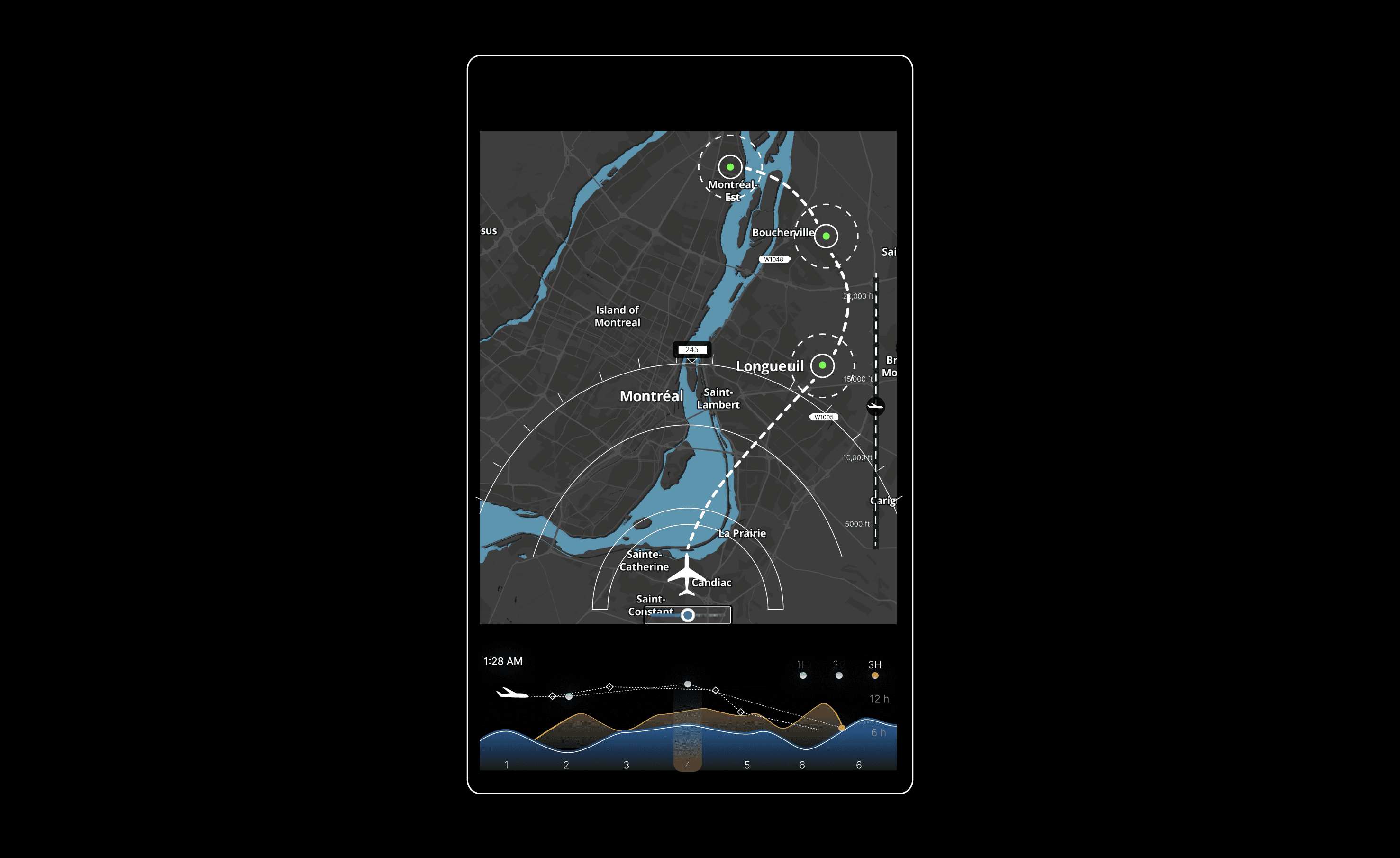
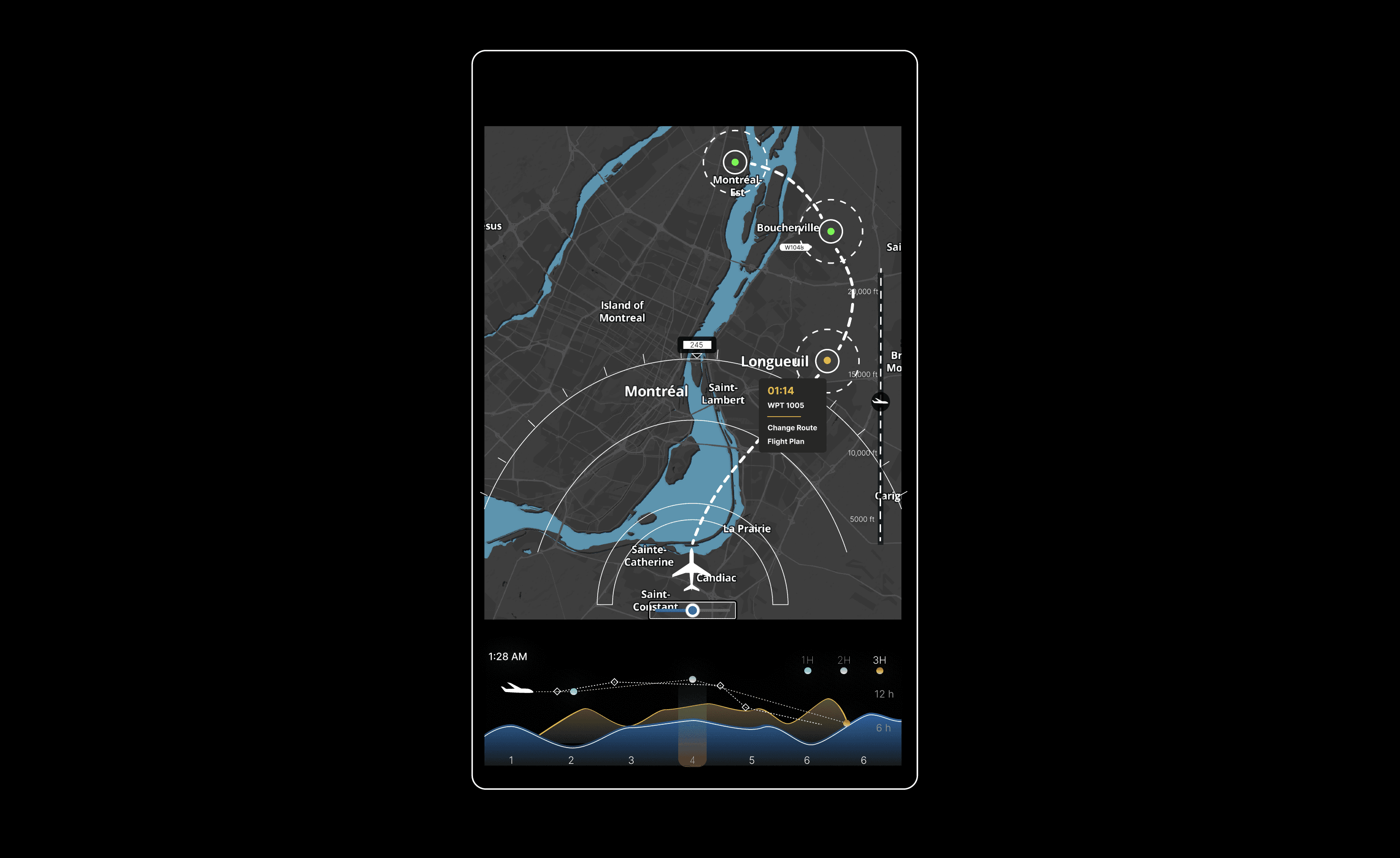
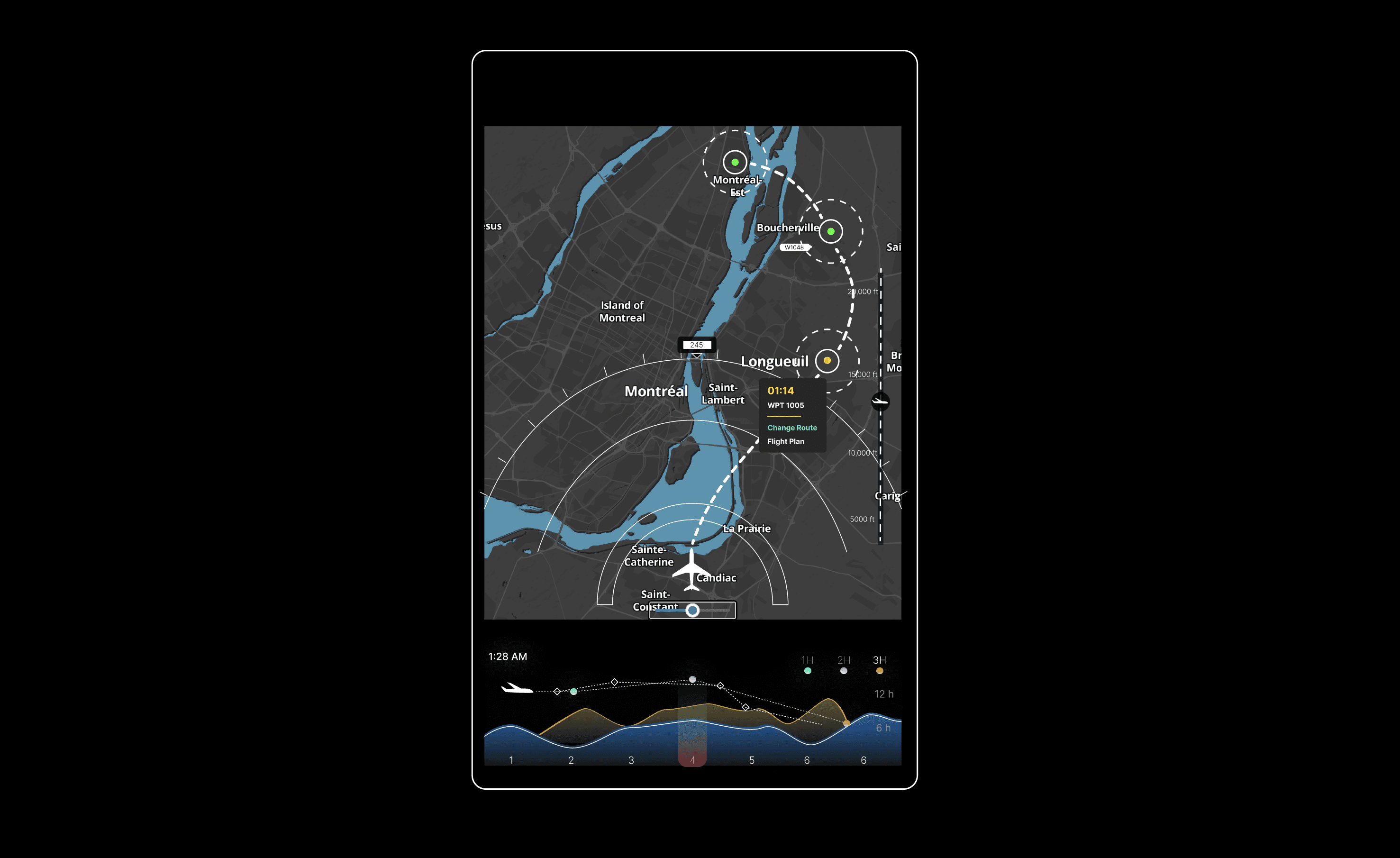
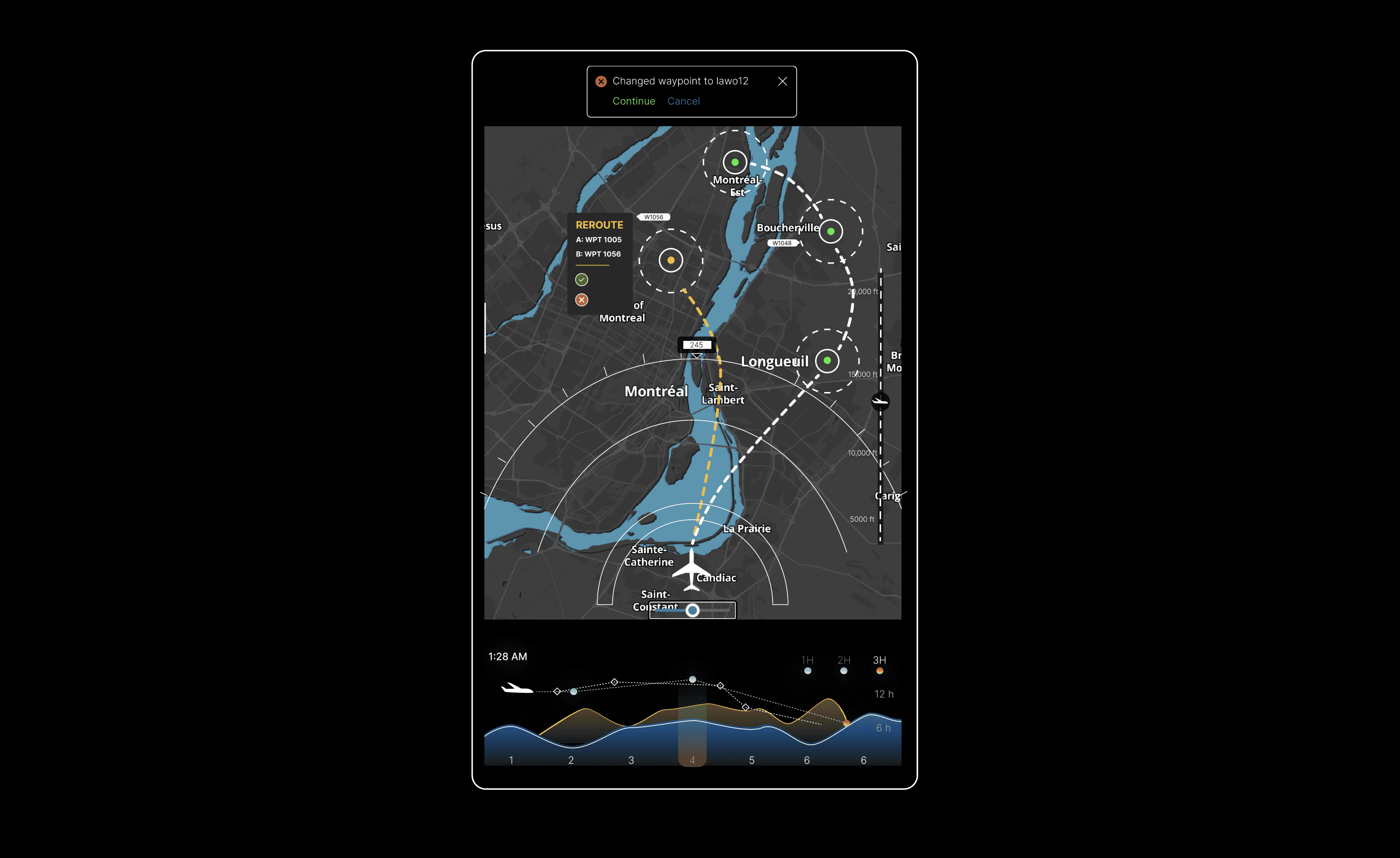
Traditional Flight Management Systems (FMS) present information across many complex pages, increasing cognitive load. The challenge was to design a modern, touchscreen interface that simplifies pilot workflow, provides a clear, full-trajectory view, and intuitively integrates Required Time of Arrival (RTA) and Trajectory-Based Operations (TBO) management.
My Approach & Contributions :
Human Factors & System Analysis: I began by deeply researching the existing A220 FMS interface, particularly analyzing its FCOM documentation. This helped identify pain points and opportunities to reduce errors and cognitive load. I also learned to operate an FMS to fully understand the pilot's workflow.
UI/UX Design Process: I was responsible for the end-to-end design of the new interface. This started with initial sketches and wireframes to map out new user flows, culminating in a high-fidelity, interactive prototype in Figma.
Design for A/B Testing: The final design was created to be tested against the existing A220 design to validate its effectiveness in improving pilot performance.
Technical Familiarization: To understand the implementation pipeline for certified avionics, I also gained proficiency in VAPS XT, an industry-standard software for developing interactive cockpit displays.
Research Outcomes
The result was a comprehensive, high-fidelity FMS prototype. This design directly addresses common human factors issues and serves as a key contribution to ongoing academic research on advanced pilot-cockpit interaction.
Project Context & Acknowledgments This work was part of a prestigious, fully funded international research internship (Advanced Airspace Usability – ADAIR) at Polytechnique Montréal, under the mentorship of Dr Philippe Doyon-Poulin.
The design was developed in close collaboration with Cécile Lescieux, a PhD student at Polytechnique Montréal, and will be used to support her thesis research.
Additional Project: Hypovigilance
Research Focus
Conducted as part of my ADAIR internship, this project was led by Dr. Philippe Doyon-Poulin and Dr. Amandeep Singh.
I collaborated with Andra (PhD student at Polytechnique Montréal) to help conduct a 20-person usability study evaluating driver vigilance.
My goal was to gain hands-on experience with the complete research pipeline, from setup to data collection and analysis.
Tools Acquired
Gained practical experience with CAPTIV NeuroLab software by assisting in the setup and operation of neurophysiological instruments.
Learned the application of Tobii eye-tracking, EEG, GSR (electrothermal activity), and heart rate variability sensors in a simulated driving environment.
Research Outcomes
Assisted in the data collection for the 20-participant study, which involved pairing sensor data with user questionnaires.
Observed the data analysis process, where the research team used graphs and heatmaps to assess human behavior, ergonomics, and driver vigilance.